Navigating Poor Ground Conditions: Engineered Foundations for Commercial and Residential Developments
A comprehensive guide for developers and homeowners in the West Midlands on overcoming challenging soil conditions. Learn how Tilsley Groundworks utilises piled foundations, reinforced concrete rafts, and engineered retaining walls to deliver stable substructures on brownfield sites and sloping plots.


category:
COMMERCIAL & TECHNICAL
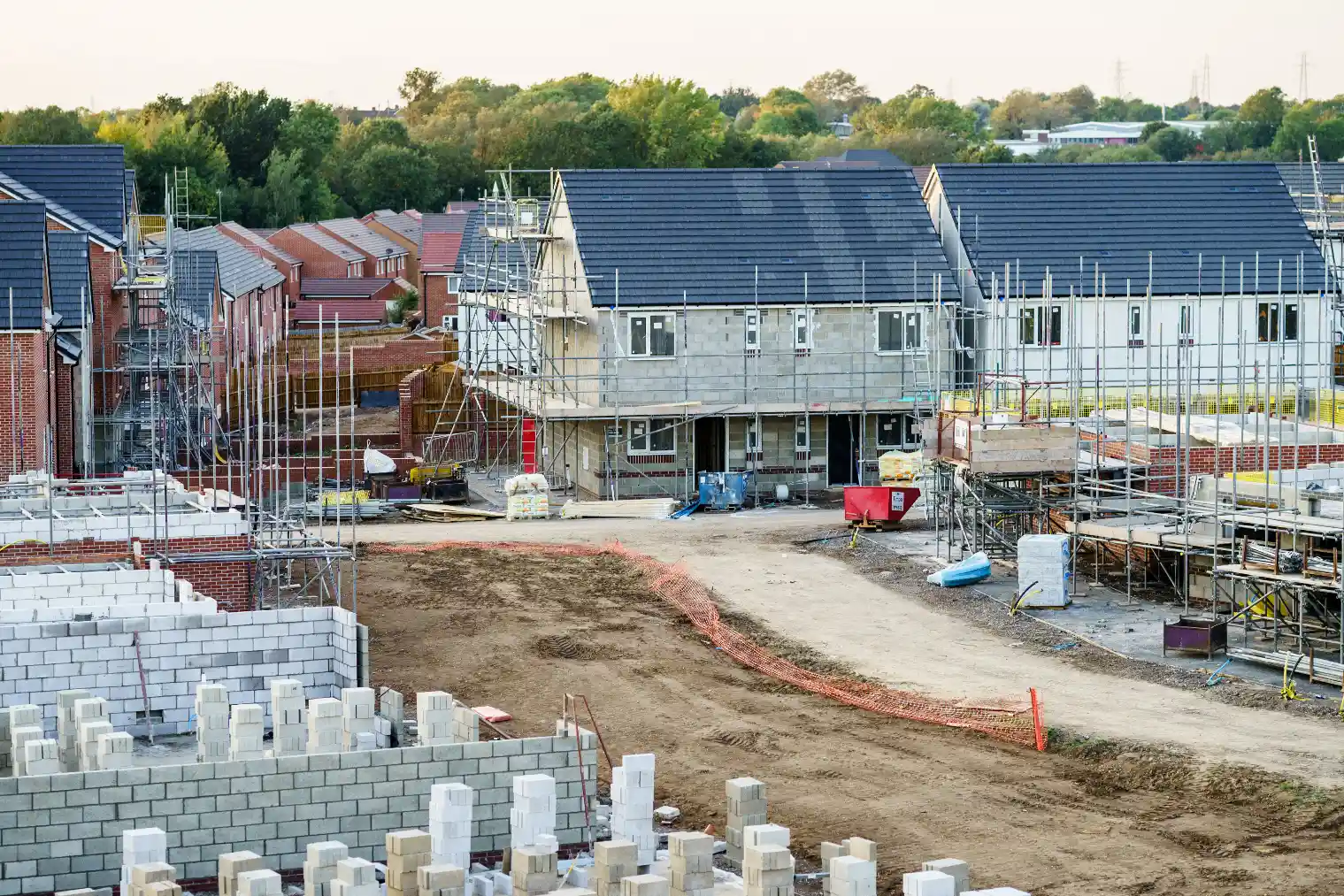
The West Midlands and Staffordshire feature a diverse and frequently challenging geological landscape. From the heavy clay soils prevalent around Tamworth and Lichfield to the highly unpredictable "made ground" found across Birmingham's historic brownfield sites, property developers and self-builders routinely encounter poor ground conditions. For any commercial or high net worth residential project, discovering that the earth cannot support standard strip footings is a significant hurdle.
When the bearing capacity of the soil is inadequate, continuing with standard foundation designs will inevitably lead to structural failure, severe subsidence, and catastrophic financial losses. However, poor ground does not mean a site is undevelopable. It simply requires a highly competent civil engineering partner capable of delivering specialized, engineered foundation solutions. Tilsley Groundworks provides exactly this level of technical expertise, ensuring your project gets out of the ground safely and compliantly.
Understanding the Problem: Site Investigations and Soil Types
Before a single excavator bucket breaks the earth, understanding the specific geology of your site is vital. The first step on any problematic site is a thorough geotechnical site investigation. This process involves drilling boreholes or digging trial pits to extract soil samples and test the load-bearing capacity of the earth at various depths.
In Staffordshire, the most common issue is highly shrinkable clay. During wet winter months, this clay absorbs water and expands. During hot, dry summers, it shrinks and cracks. This constant movement, known as ground heave, can tear standard brickwork apart. In urban areas like Birmingham and the Black Country, the challenge is often historical industrial use. These brownfield sites frequently contain loose, uncompacted fill material, old basements, or buried concrete structures that provide zero structural stability for new builds.
Solution One: Piled Foundations and Ground Beams
When the upper layers of soil are too weak or volatile to support a building, civil engineers must bypass them entirely. Piled foundations are the industry standard solution for this scenario.
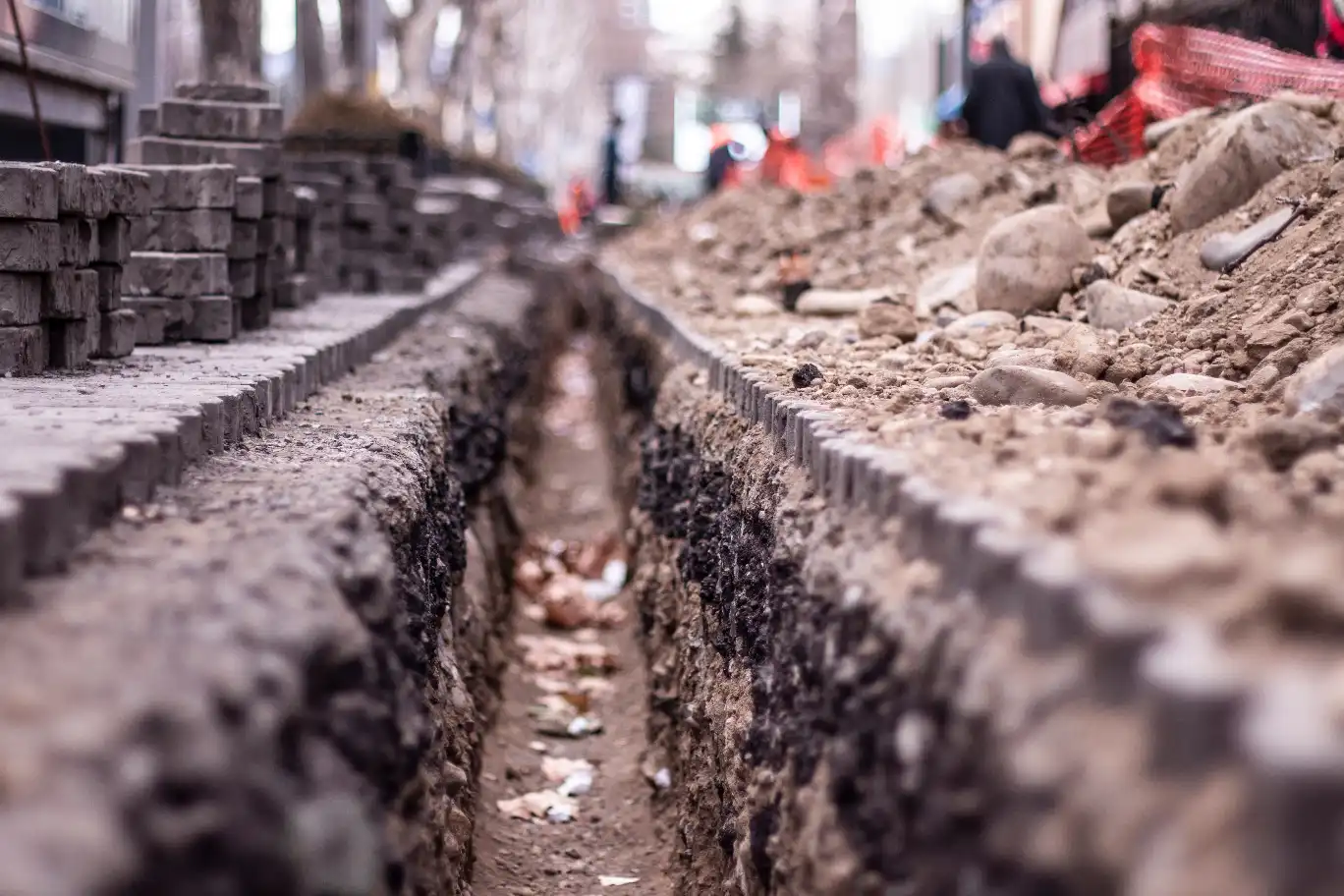
The process involves driving or boring long, slender columns of reinforced concrete or steel deep into the earth until they reach a solid, load-bearing stratum of rock or highly compacted soil. Once these piles are securely in place, Tilsley Groundworks excavates the surface trenches and constructs reinforced concrete ground beams. These heavy duty beams span across the tops of the piles, effectively transferring the entire weight of the new commercial unit or luxury home down through the piles and into the solid earth far below the problem zone.
Solution Two: Reinforced Concrete Raft Foundations
In scenarios where the ground is uniformly weak across the entire site or where deep piling is not logistically feasible, a raft foundation is often the most effective civil engineering solution.
Instead of focusing the weight of the building onto narrow strip footings, a raft foundation spreads the entire structural load over the maximum possible area. We excavate the footprint of the building, install a thick layer of compacted MOT Type 1 sub base, and lay a heavy damp proof membrane. We then construct a thick, heavily reinforced solid concrete slab that covers the entire footprint of the property. Because the slab is completely rigid, it acts like a raft floating on a fluid surface. Even if the ground below shifts slightly, the rigid raft moves as a single solid unit, preventing the building above from cracking or suffering differential settlement.
Managing Sloping Sites: Engineered Retaining Walls
Poor ground conditions are not limited to the soil composition. Severe topography and sloping sites present their own unique groundworks challenges. To create flat, buildable plateaus on a steep gradient, you must hold back thousands of tonnes of earth. Tilsley Groundworks designs and constructs heavy duty retaining walls to manage these extreme level changes safely. Whether your site requires traditional gabion baskets, pre cast concrete blocks, or in situ reinforced concrete walls poured on site, we provide the structural stability required to maximize your usable land.
Frequently Asked Questions About Problematic Ground
How do I know if my site needs piled foundations?
Your structural engineer will determine this based on the results of a professional soil survey and borehole testing. If the report shows that the soil has a low bearing capacity or consists of deep made ground, standard trenches will not be permitted by local Building Control, and piling will be specified.
Are raft foundations more expensive than standard footings?
Initially, the volume of steel reinforcement and concrete required for a raft foundation makes the material costs higher than standard strip footings. However, because raft foundations require significantly less deep excavation and zero spoil removal from deep trenches, they often save developers money on labour, plant hire, and muck away costs.
Why choose Tilsley Groundworks for complex foundations?
Complex foundations require absolute precision and heavy machinery. Smaller local builders simply do not have the equipment or the engineering knowledge to execute these structures safely. Tilsley Groundworks owns a comprehensive fleet of Volvo excavators, dumpers, and heavy haulage vehicles. We control the entire process from the bulk excavation and sub base preparation to the final concrete pour. By using our own direct labour and our own plant, we eliminate the delays associated with third party hire companies, delivering your complex foundations on time and exactly to specification.
more INSIGHTS
Articles
Groundworks is a complex field governed by shifting regulations. Our resource hub helps homeowners and developers navigate the technical landscape, from understanding foundation repair costs to meeting new Biodiversity Net Gain (BNG) requirements.