

NEW BUILD FOUNDATIONS & SUBSTRUCTURES.
Engineered precision for self-builds and extensions. From site clearance to Damp Proof Course (DPC), delivered with the reliability of our 100% owned Volvo fleet.



+/-5mm
Accuracy
Laser-Guided Levels
100%
Pass Rate
Building Control Compliant

Owned
Plant
No Hire Delays
The Most Critical Stage of Your Build
Services
The longevity of your property is dictated by what lies beneath it. Whether you are constructing a single-storey extension in Burton-on-Trent or a bespoke self-build home in Market Bosworth, the foundation phase carries the highest technical risk. It is where engineering theory meets the reality of Staffordshire’s soil conditions.
At Tilsley Groundworks, we remove the guesswork. We work directly with your structural engineers and architects to translate drawings into physical reality. Our team specialises in the three primary methods of residential substructure construction, ensuring your build is compliant with UK Building Regulations from day one.

Traditional Strip Foundations
For sites with stable ground conditions (sand or firm clay), strip foundations remain the most cost-effective solution. We undertake the complete package: excavating the trench to the required bearing strata, installing steel reinforcement mesh (if specified), and coordinating the concrete pour.
Key Spec:
Laser-levelling ensures the concrete is poured to exact heights, minimising the number of brick courses required to reach DPC.


Engineered Raft Foundations
In areas with poor load-bearing soil or a high water table, a standard strip footing may fail. Here, we implement engineered raft foundations. This involves creating a large, steel-reinforced concrete slab that "floats" on the ground, spreading the weight of your home over the entire footprint to prevent subsidence.
Key Spec:
We handle the complex steel tying and formwork required for rafts, ensuring the structural integrity meets the engineer's calculations.

Substructures & Block and Beam
In areas with poor load-bearing soil or a high water table, a standard strip footing may fail. Here, we implement engineered raft foundations. This involves creating a large, steel-reinforced concrete slab that "floats" on the ground, spreading the weight of your home over the entire footprint to prevent subsidence.
Key Spec:
We handle the complex steel tying and formwork required for rafts, ensuring the structural integrity meets the engineer's calculations.

Surgical Excavation for Tight Spaces
A common fear for homeowners is that a groundworks team will turn their property into a "mud bath" or damage existing driveways.
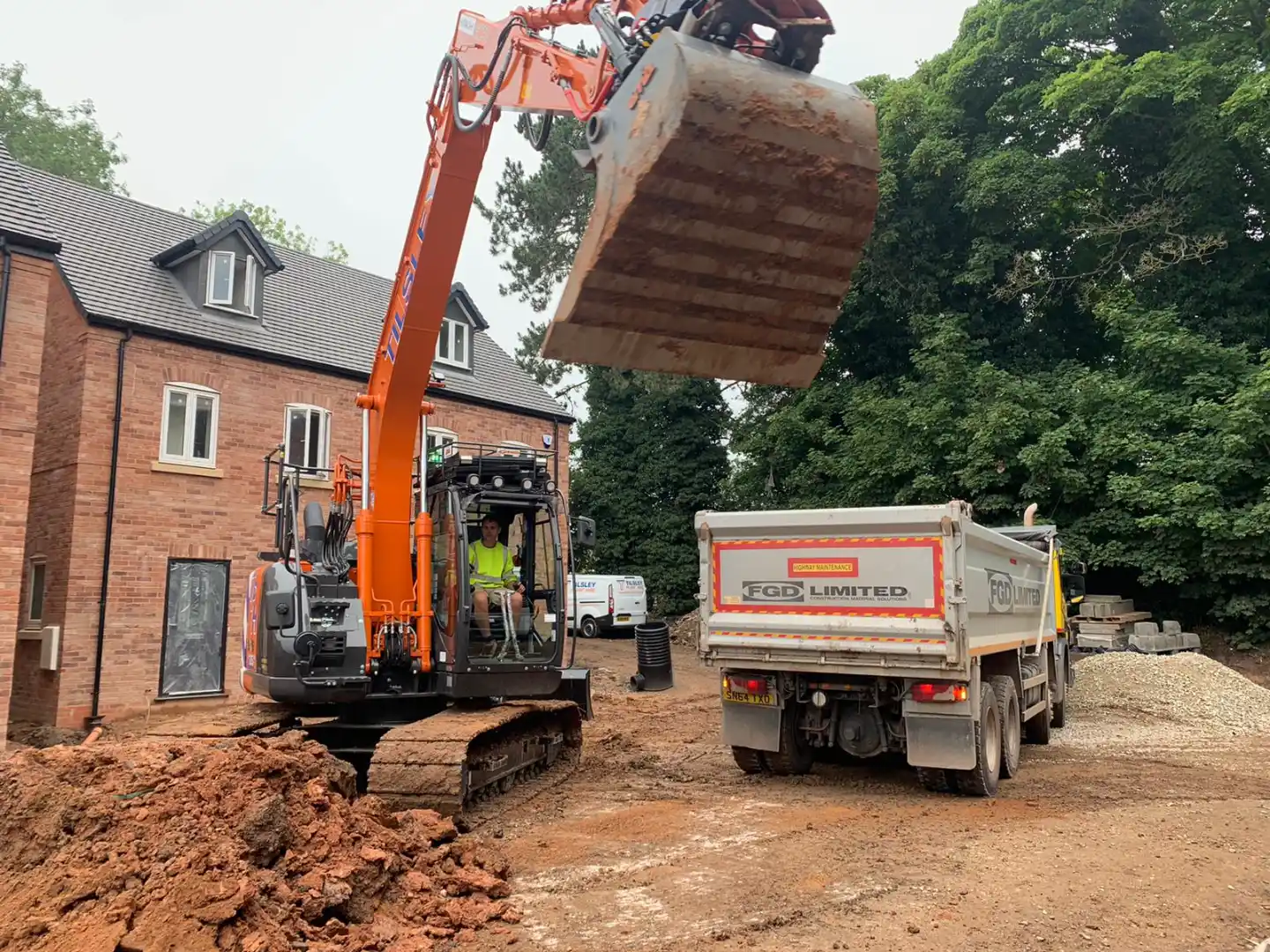
We deploy our own fleet of excavators, these are "Zero-Tail Swing" machines, meaning the body of the digger rotates within the width of its own tracks. This allows us to excavate precise foundation trenches right up to your boundary wall or fence without the rear of the machine swinging out and causing collateral damage. Combined with rubber tracks and ground mats to protect your paving, we offer a level of cleanliness and care that standard plant hire cannot match.

From Soil Test to Sign-Off
1
Site Assessment
Before we dig, we verify. We can arrange trial holes to confirm soil conditions, ensuring the foundation design matches the reality of the ground.
2
Laser-Guided Excavation
Our team excavates the footings using laser receivers on our machines, ensuring the trench depth is accurate to within +/- 10mm across the entire site.
3
Concrete & Reinforcement
We coordinate the concrete pump and ready-mix delivery. We install steel reinforcement cages and pour the footings to the exact finished level.
4
Building Control Approval
We liaise directly with your Building Control Officer. We do not cover any work until it has been inspected and passed, guaranteeing you get your completion certificate.

Drayton Bassett Luxury Development: Foundations and Void Excavation
project
Challenge
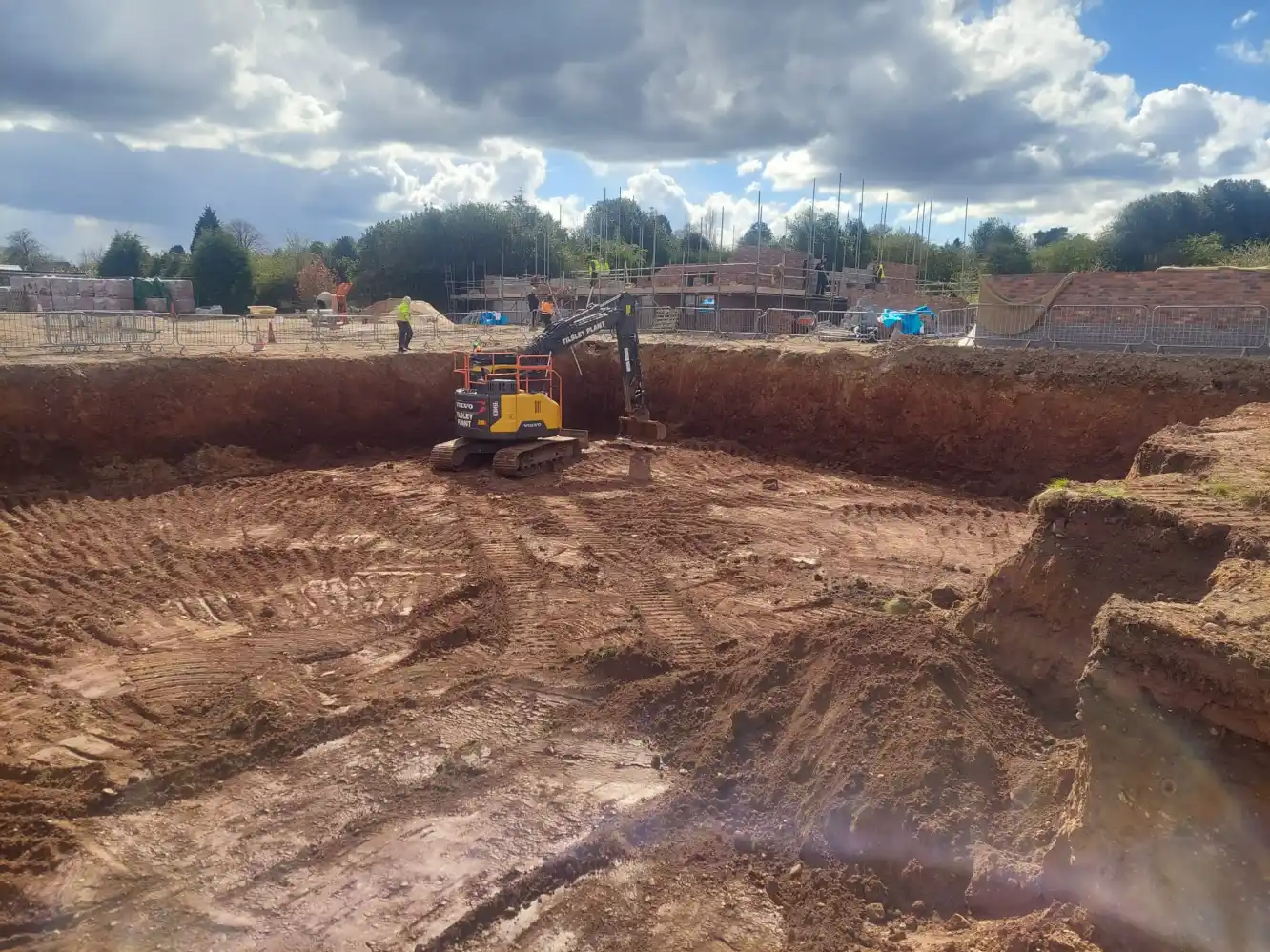
In 2021, a residential developer engaged Tilsley Groundworks for a high-specification new build project in Drayton Bassett, near Tamworth. The project involved the construction of a substantial, large-footprint luxury dwelling. The site topography required significant levelling before work could commence, and the structural design called for a block and beam floor system. This necessitated a precise "reduced level" dig to create a functional void beneath the flooring for ventilation and ground heave protection. The developer needed a contractor who could manage the engineering set-out, the heavy excavation, the concrete pour, and the logistical headache of removing hundreds of tonnes of spoil from the site without delaying the build programme.
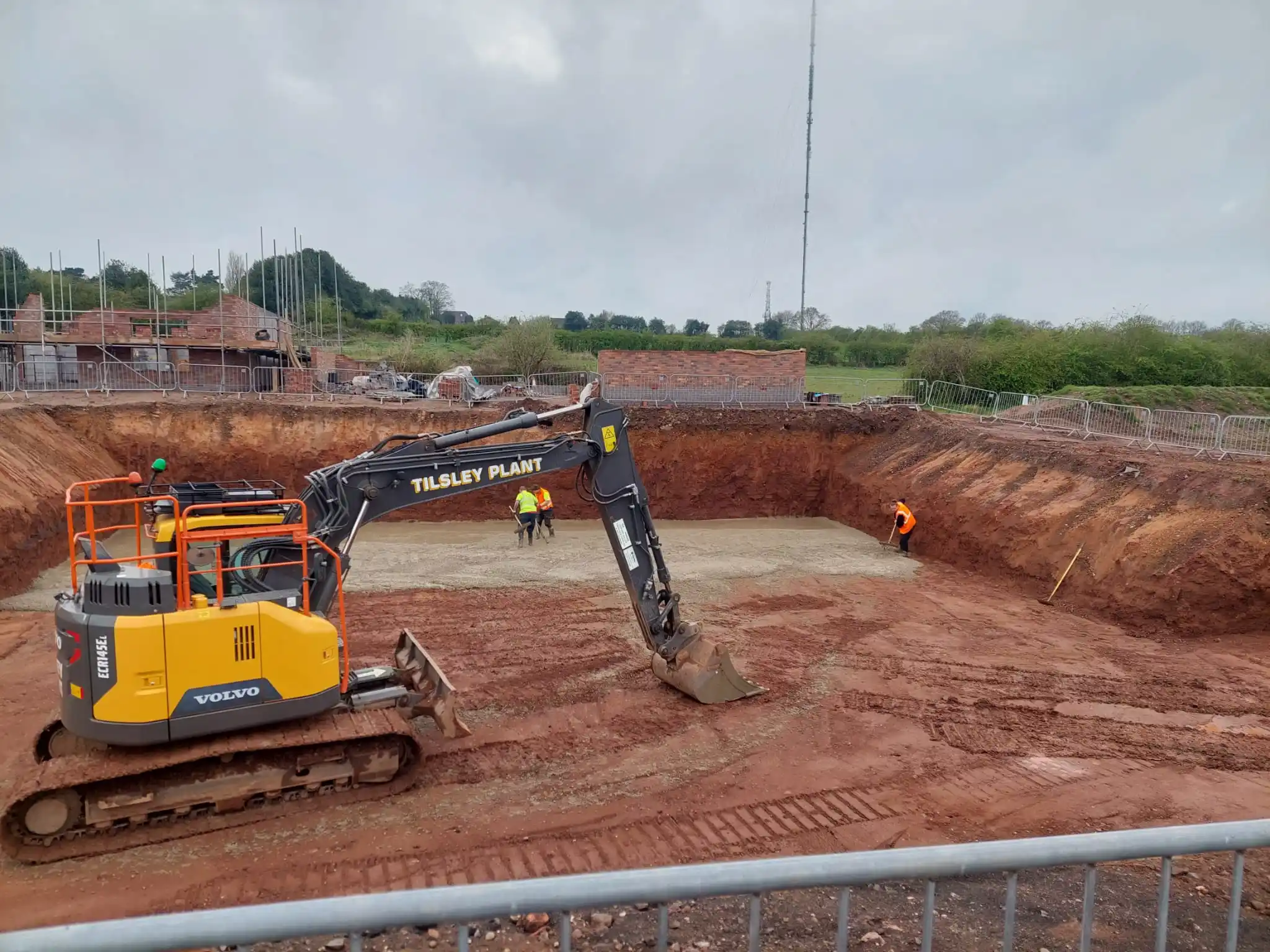
Tilsley Groundworks delivered a comprehensive site enablement and foundation package. Working closely with the project engineer, we marked out the complex footprint of the large dwelling with laser precision. Our team levelled the site to the required datum before excavating the trench foundations and the substantial oversite void. Crucially, we utilised our own in-house fleet of heavy haulage tippers to manage the "muck away" process simultaneously. This ensured that as the spoil was dug, it was immediately carted off-site, keeping the workspace clear and safe. We then supplied and poured the concrete footings, finishing them to a strict tolerance ready for the masonry team.
Solution
The developer was handed a pristine, build-ready site with foundations poured to the exact engineering specification and the block and beam void perfectly formed. The site was left clean and free of spoil, allowing the bricklayers to commence work immediately on a solid, level base.
Outcome
New Build Groundworks FAQ

Do I need a soil test before starting foundations?
Do I need a soil test before starting foundations?
Do you handle the Building Control inspections?
Do you handle the Building Control inspections?
Can you install the drainage and service ducts at the same time?
Can you install the drainage and service ducts at the same time?