Commercial Deep Drainage and SuDS: Future-Proofing Midlands Developments
A technical guide for commercial developers and main contractors in the West Midlands on the importance of compliant deep drainage and Sustainable Drainage Systems (SuDS). Learn how Tilsley Groundworks manages attenuation tanks, Section 106 connections, and storm water to keep your project on schedule and strictly within environmental regulations.

category:
COMMERCIAL & TECHNICAL
Water management is no longer an afterthought in modern commercial construction. With increasingly unpredictable weather patterns and stringent planning regulations enforced across the West Midlands, installing a robust commercial drainage system is a critical early phase of any site enablement programme. For commercial developers, main contractors, and Quantity Surveyors, getting the deep drainage infrastructure wrong means facing costly delays, failed local authority inspections, and the severe risk of future flooding.
To navigate these challenges successfully, developers need a civil engineering partner capable of delivering complex underground infrastructure. Tilsley Groundworks provides exactly this level of expertise, specialising in deep drainage, sewer connections, and Sustainable Drainage Systems for the commercial and industrial sectors.
The Rise of Sustainable Drainage Systems
Sustainable Drainage Systems, commonly referred to as SuDS, are now a mandatory planning requirement for the vast majority of new commercial groundworks projects in the UK. Historically, industrial estates and large paved logistics yards would channel storm water directly into the public sewer network as quickly as possible. This outdated approach routinely overwhelms municipal systems during heavy rainfall, leading to localized flooding and environmental pollution.
SuDS are designed to mimic natural drainage processes. Instead of pushing the problem downstream, these systems manage surface water runoff as close to its source as possible. This involves capturing the water, cleaning it, and releasing it slowly back into the ground or the public sewer network at a strictly controlled rate.
Attenuation Tanks and Flow Control
The backbone of most commercial SuDS strategies is the attenuation tank. When Tilsley Groundworks prepares a site for a new distribution centre or retail park, we frequently excavate massive underground voids to house these high-volume crate systems.
During a storm event, the vast surface area of a commercial roof and concrete yard collects thousands of litres of water. This runoff is directed into the underground attenuation tank, which stores the water safely beneath the car park or access road. A specialized flow control valve, known as a hydro-brake, is installed at the outlet. This valve ensures the stored water is released into the local Severn Trent water network at a very slow, legally permitted trickle, completely removing the risk of flash flooding.
Deep Drainage and Trench Safety
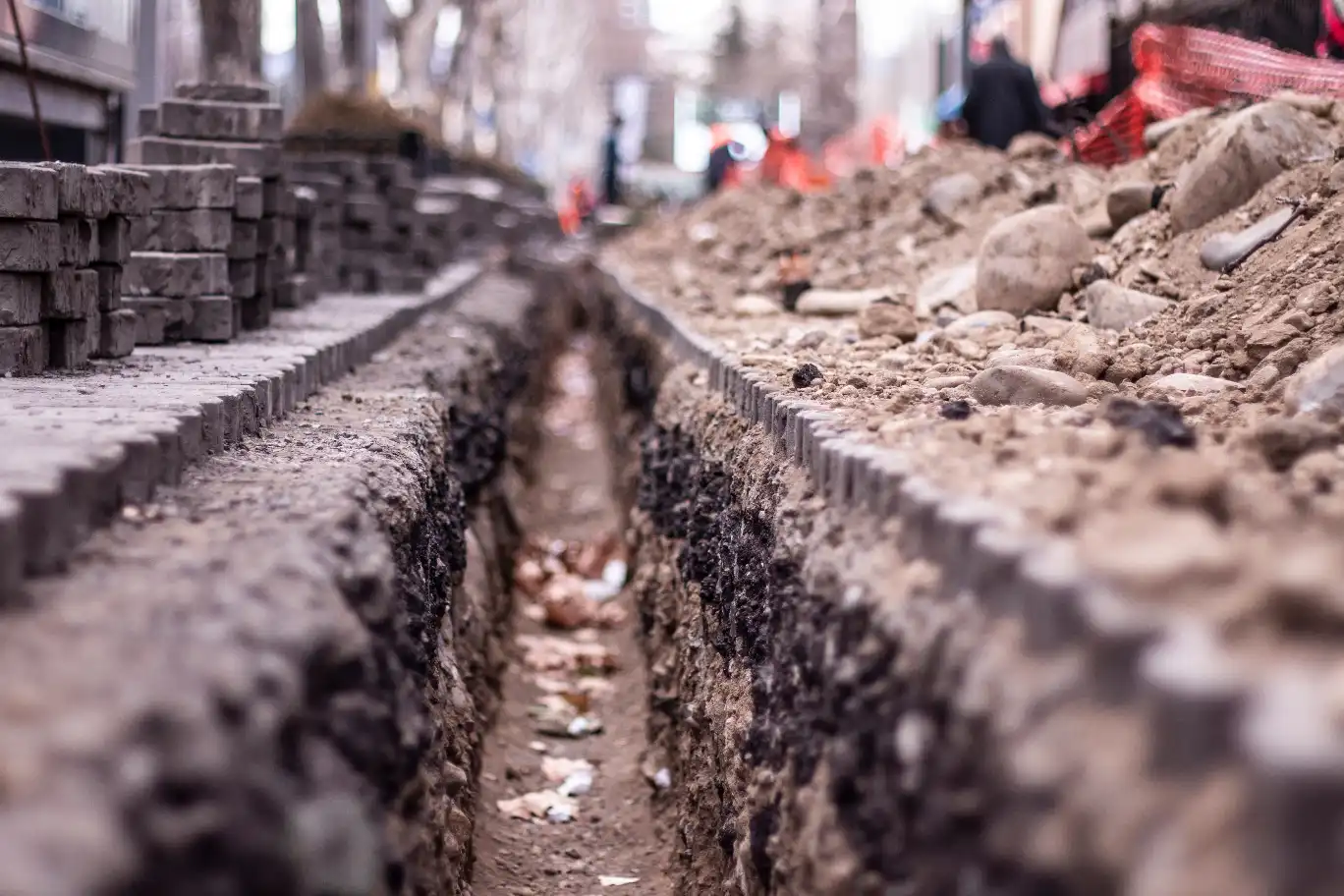
Installing commercial drainage is heavy civil engineering. Main sewer connections and large attenuation systems often require excavating trenches several metres deep. This is not work for general builders.
Tilsley Groundworks treats deep drainage with the utmost respect for health and safety. Working at depth requires highly trained operatives and specialized trench shoring equipment to prevent catastrophic soil collapse. We utilise drag boxes, trench boxes, and hydraulic bracing systems to create a safe working environment for our pipe layers. Our direct workforce is fully CSCS and CPCS qualified, ensuring that all deep drainage works are executed to the highest industry safety standards.
Frequently Asked Questions About Commercial Drainage
What is a Section 106 sewer connection?
A Section 106 agreement (under the Water Industry Act 1991) is the legal permission required to connect your private commercial drainage system to the public sewer network. Tilsley Groundworks is highly experienced in managing S106 applications and executing the physical connections. We liaise directly with authorities like Severn Trent Water to ensure your connection is inspected and approved without delaying your build programme.
Why do industrial sites need oil interceptors?
If your commercial development includes a large car park, a heavy goods vehicle yard, or a refuelling station, you must install an oil interceptor (also known as a separator). These underground fibreglass or concrete tanks are designed to trap harmful hydrocarbons, motor oil, and silt, preventing them from contaminating the local water table or public sewer.
How do you manage ground conditions during excavation?
The West Midlands features a wide variety of ground conditions, from heavy clay in Staffordshire to softer, sandy soils near the rivers. We conduct thorough site investigations before breaking ground. If we encounter a high water table during a deep drainage excavation, our squads deploy heavy-duty submersible pumps to dewater the trench, allowing the pipework to be laid on a perfectly laser-levelled bed of pea shingle.
The Tilsley Groundworks Advantage
Executing complex civil engineering requires the right tools. Many contractors struggle with deep drainage because they rely on hiring large excavators and trench support systems from third-party suppliers, which frequently leads to logistical delays.
Tilsley Groundworks controls the entire process. We own a comprehensive fleet of Stage V Volvo excavators, ranging up to 22 tonnes, which are perfectly suited for deep bulk excavations. We own our dumpers and our heavy haulage transport. By relying on our own plant and our own directly employed engineers, we guarantee that your commercial drainage infrastructure is installed safely, compliantly, and exactly on schedule.
more INSIGHTS
Articles
Groundworks is a complex field governed by shifting regulations. Our resource hub helps homeowners and developers navigate the technical landscape, from understanding foundation repair costs to meeting new Biodiversity Net Gain (BNG) requirements.