Remote Off-Mains Drainage: Complete Septic Tank Installation 2024
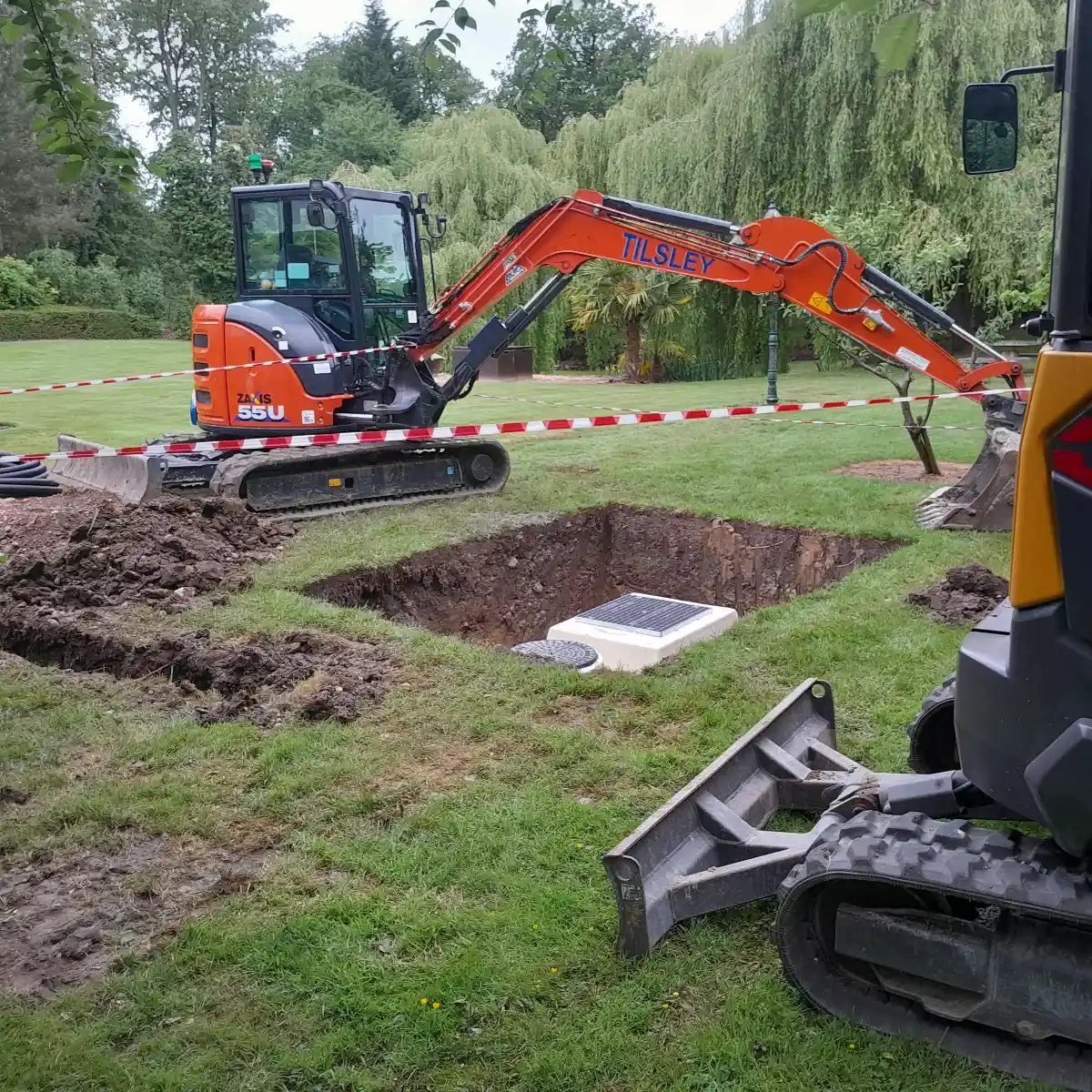

A comprehensive remote drainage project completed in 2024. Tilsley Groundworks supplied and installed a septic tank and full drainage infrastructure for a private homeowner, managing all logistics, concrete works, and ground reinstatement in-house.
Delivering Infrastructure to the Remote Homeowner
Executive Summary
For homeowners living "off-grid" or in remote locations, drainage is not a luxury; it is a critical utility. When a property cannot connect to the main public sewer, it relies entirely on a private septic tank or treatment plant. In 2024, a private client approached us with a requirement to install such a system. The challenge was not just the engineering, but the geography. Remote sites are the graveyard of poor logistics. If a contractor runs out of pipe or breaks a machine in a location miles from the nearest builders merchant, the job stops, costs spiral, and the homeowner is left with an open hole in their garden. Tilsley Groundworks was selected because we eliminate this variable. As a contractor that supplies its own materials and transport, we function as a self-contained unit. We arrived on site with the tank, the aggregate, the concrete, and the machinery required to finish the job. The client wanted a single point of responsibility for their drainage, ensuring that the complex regulations regarding wastewater discharge were met without them having to coordinate multiple suppliers.
A Complete Supply and Install Package
The tilsley Solution
Our solution was comprehensive. We did not ask the client to source the tank or order the stone; we managed the entire procurement process. This ensures that every component, from the 110mm drainage pipe to the concrete grade used for the surround, met our internal quality standards.
The project began with a precise "Mark Out" phase. Drainage relies on gravity. If the levels are wrong at the start, the system will block later. Our engineers used laser levels to calculate the fall from the house to the proposed tank location, ensuring the gradient was sufficient to maintain flow but not so steep as to separate liquids from solids. Once the geometry was confirmed, we mobilised our owned plant fleet to commence the bulk excavation, carefully stripping the topsoil and storing it separately for the reinstatement phase.
Anchoring, Connection, and Protection
Technical Implementation
The installation of a septic tank is a precise civil engineering operation.
Phase 1: Excavation and Base Formation
We excavated the main pit to the required formation level, allowing sufficient width for the concrete surround. A critical risk with underground tanks is "flotation"—if the ground becomes saturated, a hollow tank can pop out of the ground like a cork. To prevent this, we poured a reinforced concrete base. This acts as an anchor, providing a stable, level platform for the unit.
Phase 2: Installation and Concreting
Once the base was cured, the tank was lowered into position using our excavator. We then commenced the "backfill" process. Unlike standard soil backfill, we encased the tank in lean-mix concrete. This protects the fibreglass structure from ground pressure and shifting soil, ensuring the unit remains watertight for decades.
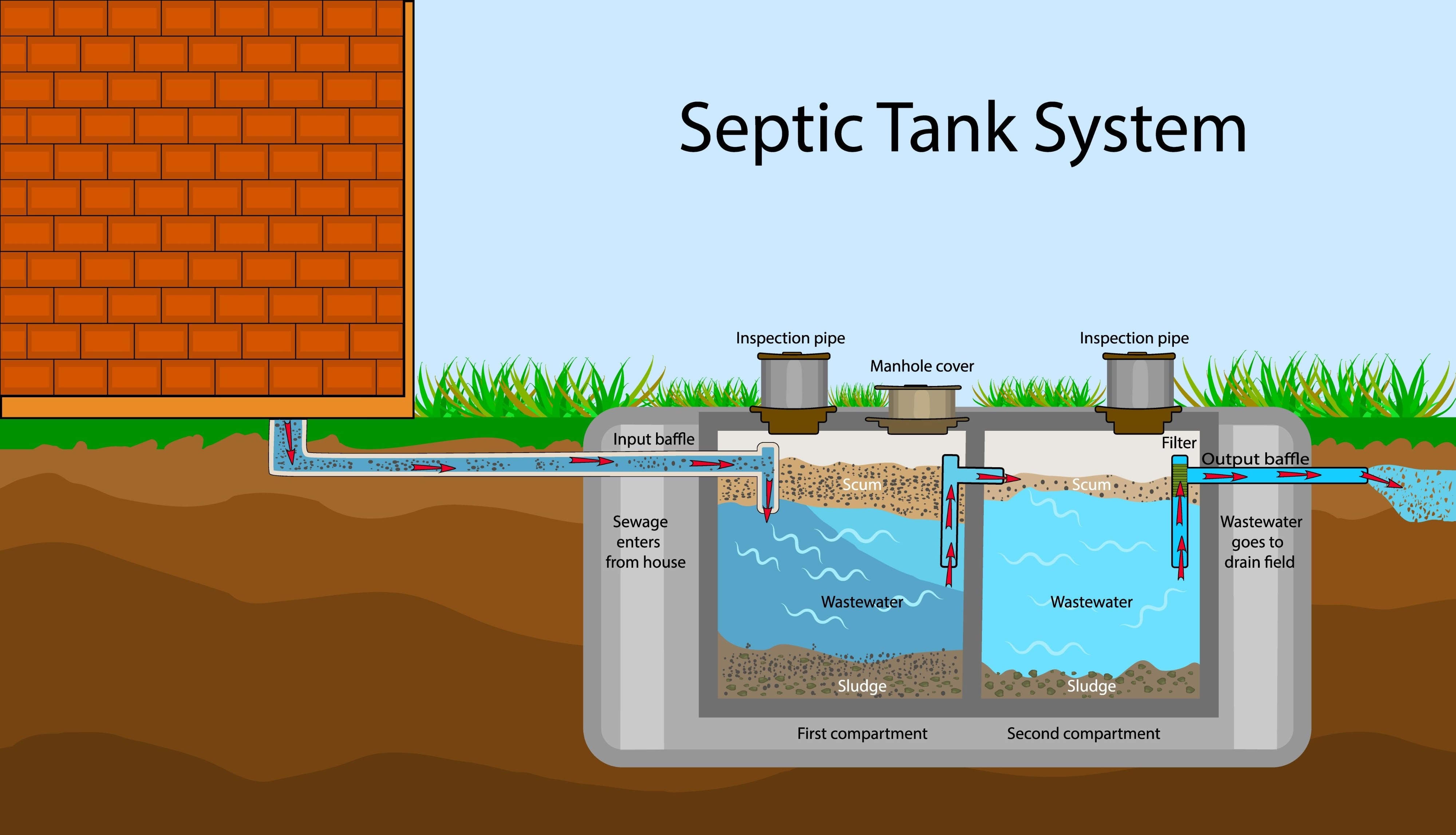
Phase 3: Drainage and Ducting
Simultaneously, we excavated the trenches connecting the house to the tank. We installed high-quality 110mm underground drainage pipework, laid on a bed of pea shingle to prevent point-loading damage. We also installed service ducting alongside the trenches, future-proofing the site for any electrical cables required (e.g., for future treatment plant upgrades or pumps).
Phase 4: Reinstatement
The final phase was aesthetic. A drainage job is only finished when you cannot see it. We backfilled the trenches, replacing the subsoil and then the topsoil. We graded the ground to match the surrounding contours, ensuring that the only visible evidence of the work was the new inspection covers.
Compliance and Peace of Mind
The Results
The project was handed over to the client in 2024 with full operational functionality. By choosing Tilsley Groundworks to supply and install, the homeowner avoided the risks associated with remote logistics. They received a fully compliant, robust sanitation system that adheres to the strict General Binding Rules for small sewage discharge.
The reinstatement was particularly successful; despite the heavy machinery used to dig the deep tank excavation, the remote landscape was returned to its natural state. This case study highlights that Tilsley Groundworks brings the same level of engineering rigour to a private residential drainage job as we do to a commercial housing development.